Teeth whitening is one of the fastest and least invasive ways to refresh your smile. However, there are many very different methods on the market and they do not all give the same result. In this article we explain in-office and at-home whitening, how long the results last and how to keep your teeth bright.
Why do teeth change colour?
There are two main types of discolouration. Extrinsic (surface) stains are the marks left on the enamel surface by tea, coffee, cigarettes and dark-coloured foods. Intrinsic (structural) discolouration concerns the deeper layers of the tooth; it can occur due to ageing, certain medications or trauma. The whitening method is chosen according to the type of discolouration.
In-office whitening
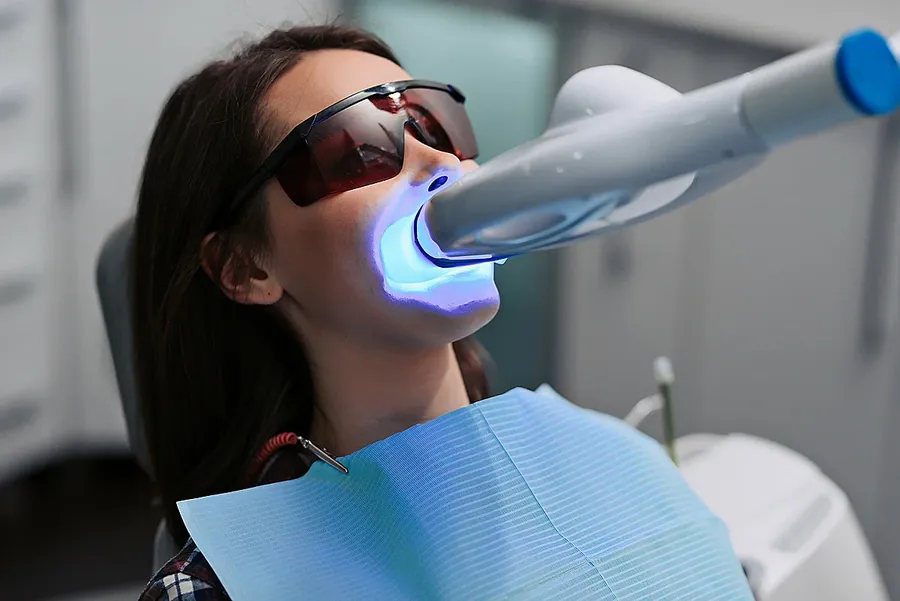
This is the method applied in the clinic, under a dentist's supervision. After your gums are protected with a special barrier, a professional gel is applied; in some protocols it is supported by a light. Its greatest advantage is speed and safety: a noticeable lightening is usually achieved in a single session, and because the procedure is carried out under a dentist's supervision, the gums and enamel are kept under control.
In-office whitening is ideal for people who want a fast result and are preparing for a special occasion (a wedding, a meeting, a trip).
At-home whitening
With this method your dentist gives you thin trays custom-made from your own impressions. You place the prescribed low-concentration gel into these trays and apply it at home for the recommended time. The result comes more slowly than with the in-office method, but it provides a gradual and natural lightening.
At-home whitening must always be done with a dentist's prescription and a custom tray. Standard, ill-fitting devices bought online can damage the gums and enamel.
In-office or at-home?
- If you want a fast, noticeable result: in-office
- If you prefer a gradual, controlled lightening: at-home
- For the best and longest-lasting result: a combined approach that plans both together is often preferred
Which one suits you is determined by evaluating your tooth sensitivity, the type of discolouration and your expectations.
How long do the results last?
Whitening is not a permanent procedure; over time teeth take on colour again. How long it lasts depends largely on your habits. Tea, coffee, red wine and smoking cause the result to fade more quickly. In general the results can be maintained for one to a few years; regular care and top-up sessions when needed extend this period.
Ways to keep your teeth bright
- Avoid dark-coloured foods and drinks in the first 48 hours after the procedure
- Drinking coffee and tea through a straw can reduce surface contact
- Quitting smoking is the most effective step for both staining and overall oral health
- Brush regularly and have a professional cleaning every 6 months
Who should be careful?
If there is active tooth decay, gum disease, cracked teeth or untreated sensitivity, these problems are addressed first. Crowns, fillings and veneers do not respond to whitening gel; for this reason your existing restorations are assessed before whitening. During pregnancy and breastfeeding, whitening is usually postponed.
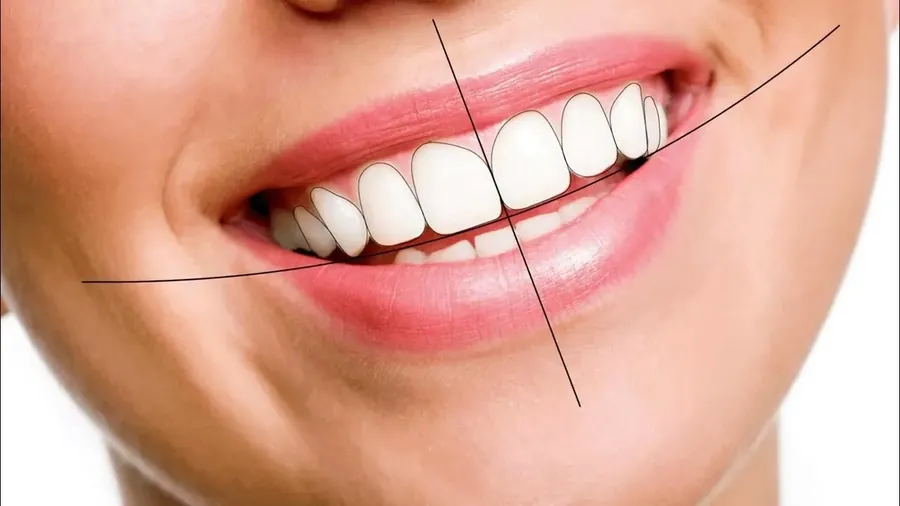
At the initial examination before whitening, it is determined whether your teeth are suitable for the procedure. You can learn about our teeth whitening treatment, and for a lasting smile makeover you can consider smile design. For a personal plan and a free quote, get in touch.
Does whitening damage the teeth?
Whitening performed under a dentist's supervision, at an appropriate concentration and for the correct duration, does not cause permanent damage to the enamel structure. Temporary sensitivity can occur during or after the procedure; this stems from the temporary effect of the gel on the tooth nerve and usually resolves on its own within a few days. Special toothpastes and fluoride applications may be recommended to reduce sensitivity. The real risk lies in uncontrolled, overly frequent whitening with unsupervised products; this is why it is important that the procedure is planned by a dentist.
Do well-known home remedies work?
Popular “natural” methods such as baking soda, lemon, apple cider vinegar or activated charcoal do not whiten teeth; on the contrary, because they are abrasive and acidic, they can permanently thin the enamel and lead to sensitivity and more staining. The white appearance most such methods produce is a temporary look that arises from the wearing away of the enamel. Safe, genuine whitening is only possible with professional methods carried out under a dentist's supervision.
What to expect after whitening
Results vary from person to person. Your natural tooth colour, the type of discolouration and the structure of your teeth determine the degree of whiteness that can be achieved. A realistic expectation is for the teeth to lighten by a few shades; it may not be possible to reach the same “white” tone in everyone. At the examination you will be told, specifically for you, what kind of result can be expected.
Frequently asked questions
How often should whitening be repeated?
This depends entirely on your habits. For most people a top-up session once a year is enough, while for heavy tea, coffee and cigarette users this interval can be shorter. Your dentist will recommend the interval that suits you.
What happens if I have a crown or veneer?
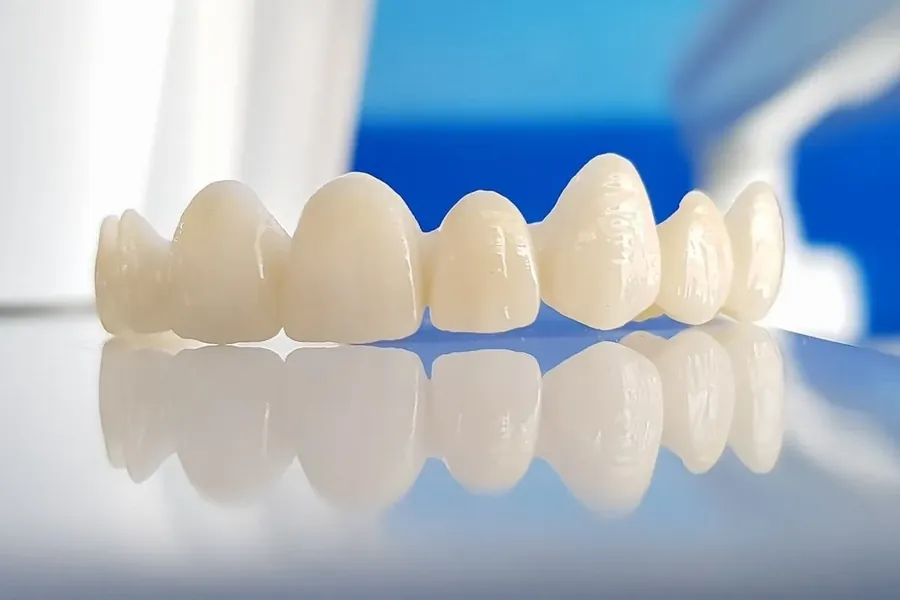
Whitening gel only affects natural teeth; existing crowns, fillings and veneers keep their colour. For this reason, in people with many restorations, smile design may be more suitable for aesthetics.