When you decide to renew your smile, the two options you most often encounter are the zirconia crown and the porcelain veneer. Both give aesthetic, natural-looking results; however, their structures, the way they are applied and the situations they suit differ from one another. In this article we compare the two impartially and guide you towards the right choice.
What is a zirconia crown?
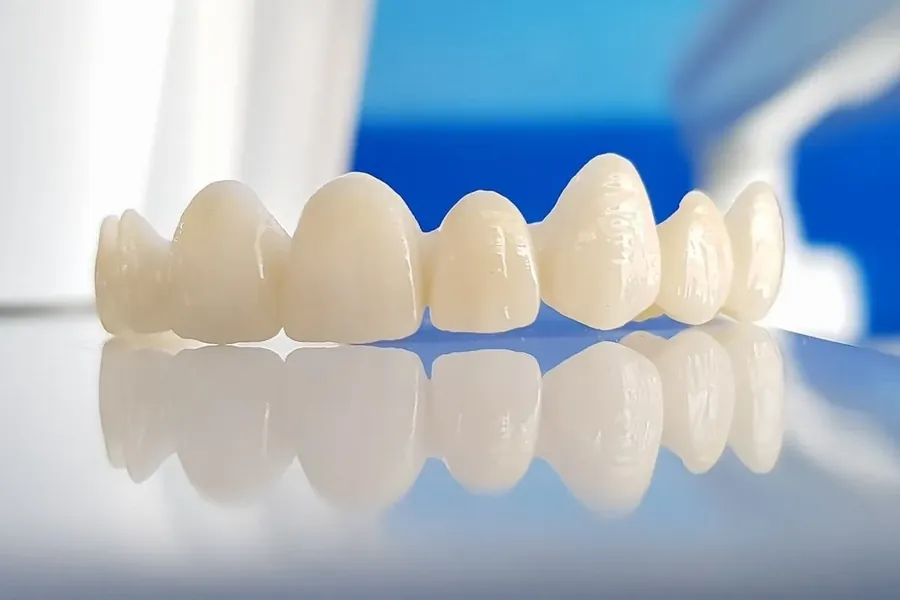
Zirconia is a type of full crown that wraps around the entire tooth. It has a white substructure with no metal underneath, one that transmits light like a natural tooth; this means it does not create a greyish shadow at the gum line. It is prepared by reducing a certain amount from around the tooth and covers the tooth completely.
Zirconia is preferred particularly for teeth that are fractured, heavily filled, discoloured, root-canal-treated, or severely distorted in shape and position. Because of its high durability, it is also used safely on back teeth and in bridge applications.
What is a porcelain veneer?
A veneer is a thin porcelain shell bonded only to the front surface of the tooth; you can think of it like an artificial nail bonded to a fingernail. Application requires only a very small amount of reduction from the tooth (in some cases almost none). In this respect it is a more preservative approach.
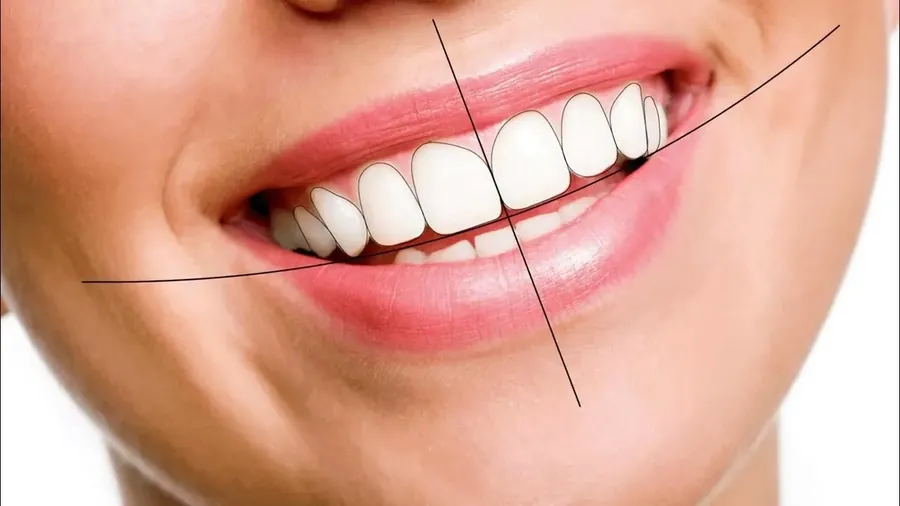
Veneers shine on healthy teeth that are simply not liked aesthetically: mild colour issues, small gaps (diastema), chipped edges or shape irregularities. Because they transmit light very similarly to natural enamel, they provide an extremely natural appearance.
The place of Emax (glass ceramic) veneers
One of the most frequently used materials among porcelain veneers is lithium disilicate glass ceramic (commonly known as E-max). Thanks to its high light transmission and natural appearance, it is preferred particularly on the front teeth. While zirconia is more opaque and durable, glass ceramic gives a more translucent and aesthetic result. Which material is used is determined according to the position of the tooth, whether the underlying colour needs to be masked, and the aesthetic expectation. This detail is clarified together with you during the digital smile design stage.
Comparing zirconia and veneers
Amount of tooth reduction
A veneer removes far less tissue from the tooth and is more preservative. Zirconia, because it covers the whole tooth, requires more reduction. If you have healthy teeth, your dentist usually evaluates the veneer first.
Durability and area of use
Zirconia is more resistant to chewing forces and is advantageous on back teeth and bridges. Veneers are ideal for front-region aesthetics; if you have a habit of biting hard objects or of grinding your teeth (bruxism), your dentist may recommend additional measures.
Aesthetics and naturalness
Both materials offer high aesthetics. Veneers look very natural, especially on the front teeth, thanks to their light transmission, while zirconia has the edge on teeth whose colour and form need to be completely rebuilt.
Which one is right for you?
To sum up briefly:
- If your teeth are healthy and you only want an aesthetic improvement: usually a porcelain veneer
- If the teeth have large fillings, fractures, a root canal or an advanced colour problem: usually zirconia
- If a bridge or a back-region crown is needed: zirconia
- If keeping tooth reduction to a minimum matters to you: a veneer
This is not a question of “one being better than the other,” but a question of the right indication. The healthiest decision is made after digital smile design and an examination. You can get details about our zirconia and veneer treatment, and to see the result before treatment you can review digital smile design.
How long does the process take?
Both zirconia and veneer applications are completed in a few sessions in most cases. The planning is done together with the impression/scan, try-in and bonding stages; for patients coming from abroad, the process is fitted into trips that are as short as possible.
Prices vary according to the material, the number of teeth and the scope of the case. At Sirius Dental Clinic we determine the exact figure individually after an initial examination and planning; you can write to us for a free quote.
Durability and care
Both types of restoration are stain-resistant and, when cared for correctly, last many years. However, if care is neglected, gum problems can develop at their edges. Brushing twice a day, using dental floss or an interdental brush, and having a professional cleaning every 6 months significantly extend the lifespan of your restorations. If you have a teeth-grinding habit (bruxism), a night guard is recommended; grinding is the most important factor that strains both veneers and zirconia.
Is the natural tooth tissue preserved?
In modern dentistry the fundamental principle is to remove as little tissue as possible. For this reason a veneer is evaluated first on healthy teeth, because it requires much less reduction. If a tooth has already had a large filling, or if it is fractured or discoloured, there is already a certain amount of tissue loss, so zirconia may make more sense. The decision is made according to the current condition of the tooth.
Frequently asked questions
Does a veneer come off after it is bonded?
With the right indication, bonded to a sound surface and with the appropriate technique, veneers do not easily come off in everyday use. Avoiding the habit of biting hard objects extends their lifespan.
Does zirconia turn grey at the gum line?
No. Because there is no metal beneath zirconia, the greyish gum shadow seen with old metal-based crowns does not form; this is one of its most important aesthetic advantages.
Can I choose the colour?
Yes. During the digital smile design stage, a colour and form suited to your facial features and expectations are determined together; you see the result before treatment begins.
Is the procedure reversible?
Because very little tissue is removed for a veneer, minimal-reduction applications are more preservative; however, every restoration involves a certain amount of tissue preparation. This is why correct planning before the decision is important. With zirconia, because the whole tooth is covered, the preparation is more extensive. In both, the aim is to both protect the tooth and achieve a long-lasting aesthetic result.