For people missing many teeth or with advanced gum disease, placing an implant for every single tooth is not always necessary. The All-on-4 and All-on-6 treatments are a modern solution that restores a fully or nearly edentulous jaw with a single, one-piece bridge fixed onto just four or six implants. In this article we explain, from a dentist's perspective, what the method is, who it suits and what to keep in mind during healing.
What are All-on-4 and All-on-6?
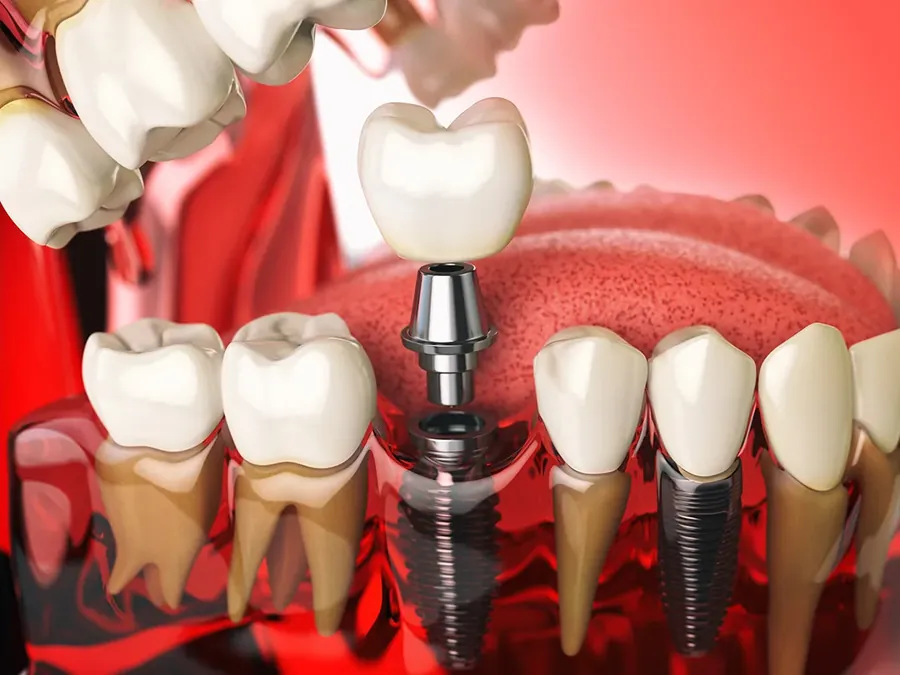
All-on-4 is a treatment concept in which all the teeth in one jaw are completed with a bridge fixed onto four implants. The two implants at the back are usually placed at an angle to make the best use of the available bone; this avoids anatomical structures such as the sinus cavity or the nerve in the lower jaw, and in most cases reduces the need for additional bone grafting. All-on-6 follows the same logic with six implants; when bone volume allows, it can provide more support and a wider distribution of load.
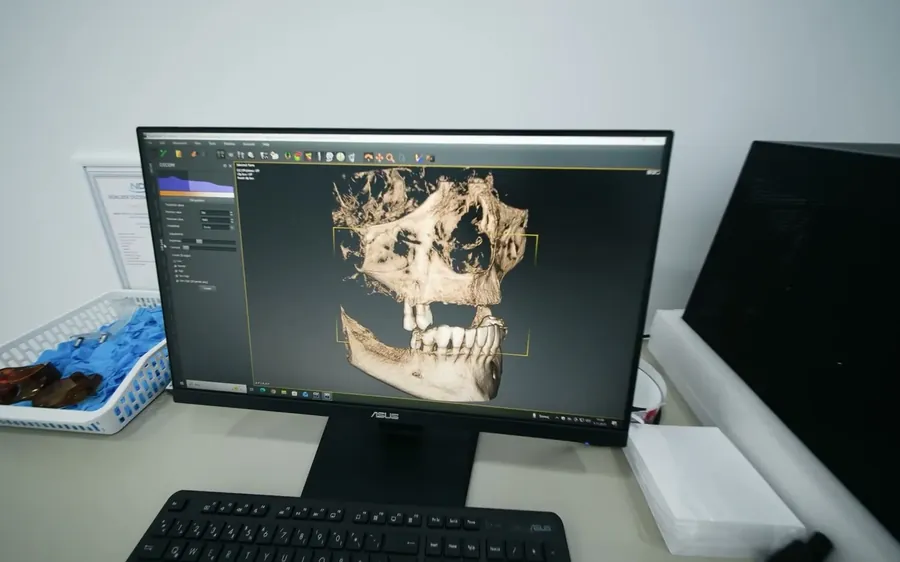
The choice between the two methods is determined by the amount of bone in your jaw, your bite force and the type of prosthesis planned. Which one is more suitable for you is assessed by your dentist after a 3D scan (CT) and digital planning.
Who is it suitable for?
These treatments are considered particularly in the following situations:
- People missing all the teeth in one or both jaws
- Those with teeth too damaged, loose or infected to be saved
- People who have worn a full denture for years and want a fixed, non-moving solution
- Those who struggle with a poorly fitting denture and have difficulty speaking and chewing
Uncontrolled diabetes, heavy smoking or certain systemic conditions can affect healing. For this reason your general health is also evaluated before treatment begins; suitability varies from person to person, and the final decision is made after an examination.
Why is it called “fixed teeth in a single day”?
The best-known advantage of the All-on-4/6 concept is that, in suitable cases, a temporary fixed prosthesis can be fitted on the very same day the implants are placed. This is called “immediate loading.” The patient can therefore leave the clinic the same day without being left without teeth. However, for this to be possible, the implants must reach a certain initial stability in the bone (primary stability); it is not possible in every case.
The temporary prosthesis is used throughout the integration period. Once the bone has fully fused with the implants, usually within a few months, new impressions are taken and the permanent prosthesis is made. The permanent prosthesis is produced from more durable materials (zirconia or hybrid structures).
Healing and adjustment period
Mild swelling and bruising in the first few days after surgery are normal and usually subside within a few days. Eating soft, lukewarm foods during the first weeks protects the integration process. Full attachment of the bone to the implant varies from person to person and jaw to jaw, but generally takes 3–6 months.
Speaking and chewing with a fixed prosthesis is far more natural than with a removable denture. Even so, getting used to your new prosthesis can take a few weeks. Regular check-ups during this period are important for monitoring the fit of the prosthesis and the health of your gums.
How is it cared for?
- Clean underneath the prosthesis and around the implants with special interdental brushes and a water flosser
- Brush at least twice a day using the recommended technique
- Avoid biting hard objects (ice, hard-shelled foods)
- Come to the clinic every 6 months for a professional check-up and cleaning
Fixed implant-supported prostheses can be used trouble-free for many years when cared for correctly. At Sirius Dental Clinic we offer a on our implant and prosthesis treatments; for details you can review our implant treatment page or contact us for an initial examination.
For our patients coming from abroad, we organise the entire plan so that it can be completed with as little travel as possible. While our prices are around 70% below those in Europe, your personal, exact figure is determined after an initial examination and treatment plan.
How does it differ from a traditional denture?
Removable full dentures rest on the gum and rely on either suction or adhesives to stay in place. Over time, as the jawbone shrinks, the denture loosens, moves while speaking and chewing, and sometimes creates sores on the gum. All-on-4/6, by contrast, is anchored to implants fixed directly into the jawbone, so it does not move, does not cover the palate and does not block your sense of taste.
Another important advantage of a fixed implant-supported prosthesis is that it transfers chewing forces to the bone and thereby slows bone loss. In an edentulous jaw the bone gradually resorbs; implants help reduce this loss and delay the sagging of facial features.
All-on-4 or individual implants?
Placing a separate implant for every tooth in a fully edentulous jaw means more implants, a longer treatment and a higher cost. In most cases four or six implants are enough to support the whole jaw and are a more economical solution. However, for some patients with very good bone volume who want more fixed teeth, alternative plans can also be considered. The right number is determined by the person's bone structure and expectations.
Factors that affect the cost
The scope of All-on-4/6 treatment varies according to factors such as the implant brand used, the material of the temporary and permanent prostheses (acrylic, hybrid or full zirconia), whether one or both jaws are treated and whether additional procedures are needed. For this reason it would not be right to give a standard list price. At Sirius Dental Clinic we share your personal, exact figure after an initial examination and digital planning, with no surprises.
Frequently asked questions
Is the treatment painful?
The surgical procedure is carried out under local anaesthesia (with sedation if desired); no pain is felt during the procedure. The mild discomfort expected in the following few days is easily controlled with the recommended painkillers.
How long do the implants last?
Well-maintained implants that are checked regularly can be used trouble-free for many years. The decisive factors are oral hygiene, not smoking and regular check-ups. We provide a on our treatments.
Is there an age limit?
Any adult who has completed bone development is a candidate. Advanced age alone is not an obstacle; what matters is general health and bone structure.